top of page

Free Consultation

Thanks for submitting!

Our Services

MRD Services offers a range of solutions including Haul Off, Pick Up, and Drop Off to meet your logistical needs efficiently and effectively.

Repairs Offered

Our skilled team specializes in repairs, ensuring your equipment is maintained to the highest standards for optimal performance.

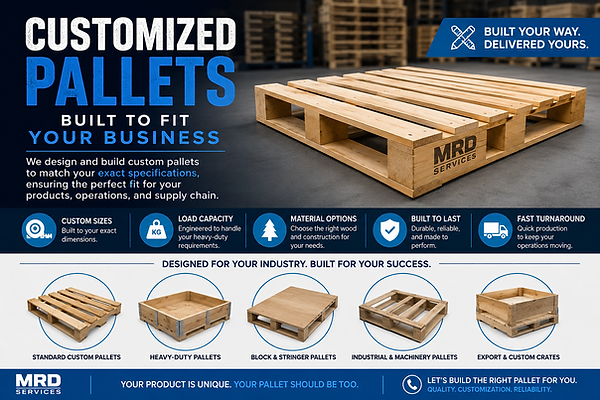
Customization

We provide tailored solutions to ensure our services fit your specific requirements, enhancing your overall experience with us.

Reliable Support

Count on us for dependable support throughout your service journey, ensuring seamless communication and assistance whenever needed.

Quality service guaranteed.

The Biggest Misconception About Grade A Pallets

One of the most common misconceptions is that Grade A (Wood #1) pallets are the same as new or premium pallets. They are not.

Grade A pallets are used pallets that remain in excellent structural condition. Because they have already been in service, customers should not expect them to have the flawless appearance of a brand-new pallet. Minor cosmetic wear, such as scuffs, discoloration, or nail marks, is normal and does not affect their performance.

What makes a Grade A pallet stand out is its structural integrity. These pallets have not undergone stringer repairs and have typically undergone only a limited number of shipping cycles, making them among the highest-quality recycled pallet options available.

Why Grade A Pallets Are More Durable

The primary difference between Grade A and Grade B pallets lies in the condition of the stringers (also called runners).

Grade A pallets have original, unrepaired stringers. Because the stringers have not been compromised or reinforced, they generally provide greater strength and durability than lower-grade recycled pallets.

Grade B pallets, on the other hand, have experienced structural damage that has been repaired. These repairs often include companion stringers (also called companion runners) or repair blocks attached to reinforce a damaged stringer. While Grade B pallets remain safe and functional for many applications, the repairs indicate they have seen more wear than Grade A pallets.

How to Identify Grade A and Grade B Pallets

For someone unfamiliar with pallet grading, distinguishing between Grade A and Grade B pallets can be difficult.

The easiest way to identify them is by inspecting the stringers:

  • Grade A (Wood #1): Original stringers with no companion repairs.

  • Grade B (Wood #2): One or more stringers have been reinforced with companion stringers or repair blocks.

If a pallet has a companion attached to a stringer, it is generally classified as a Grade B pallet.

Grade A vs. Premium (New) Pallets

Although Grade A pallets are the highest quality among recycled pallets, they should never be confused with premium (new) pallets.

Premium pallets are newly manufactured and have never been used. They are often custom-built to meet a customer's exact specifications, including size, load capacity, wood species, and design requirements. Because they are brand new, premium pallets are free of wear, repairs, and cosmetic imperfections.

Grade A pallets offer an excellent balance of quality and value, while premium pallets are best suited for applications requiring new, customized shipping platforms.

What Are Grade C Pallets?

Grade C pallets are damaged recycled pallets that have reached the end of their normal service life. They typically have multiple broken deck boards, damaged stringers, missing components, or extensive wear from repeated circulation.

Rather than being discarded, many Grade C pallets can be recycled, making them a more environmentally responsible option.

Depending on their condition, Grade C pallets may be:

  • Repaired and rebuilt into Grade B pallets.

  • Dismantled so usable lumber can be recovered.

  • Processed into wood mulch, animal bedding, biomass fuel, or other recycled wood products.

Recycling damaged pallets helps reduce landfill waste, conserves natural resources, and extends the life cycle of valuable wood materials.

bottom of page